How terra alma Curates Local Makers and Bakers for Master-Planned Communities
There's a question I get asked at almost every developer meeting, and it usually sounds something like this: "We want authenticity. We want local. How do we actually get there?"
It's the right question. And it's harder to answer than most developers expect — not because local operators don't exist, but because finding them, vetting them, and placing them in a way that sets them up to survive and thrive inside a large-scale development requires a completely different skill set than conventional retail leasing.
This is the work terra alma was built to do.
The Problem With How Most MPCs Approach Retail
Most master-planned communities treat retail as an amenity something you add near the end of the planning process to make the community feel complete. A coffee shop here. A restaurant pad there. Maybe a food hall if the developer is feeling ambitious.
The result is almost always the same: national chains, because they're the path of least resistance. They have lawyers, they have brokers, they have proven concepts, and they sign leases. Local operators, by contrast, often don't have any of that. They have a great product, a loyal following, and a dream — but they've never negotiated a commercial lease, they don't have three years of financials, and they've never been asked to operate inside a development with 3,000 homes coming online over ten years.
Dropping a local baker into that environment without preparation is setting them up to fail. And when they fail, the developer loses the authenticity they were trying to create and the community loses a business it actually loved.
The way to solve this isn't to lower your expectations for local operators. It's to change how you find them, prepare them, and structure the deal.
What Curation Actually Means
When terra alma says we curate operators, we don't mean we scroll Instagram and send a few cold DMs to food businesses we think look cool. Curation is a process, and it starts long before a single lease is signed.
It begins with understanding the community — not just the demographics on paper, but the daily rhythms of the people who will actually live there. What do they cook at home? Where are they driving right now to get their Saturday morning coffee? What's missing within a 15-minute radius that they genuinely wish existed? The answers to those questions shape everything about who belongs in a given development and who doesn't.
From there, we go find them. That means activating a network that terra alma has spent 20 years building across the Southeast operators we know personally, chefs we've watched evolve, makers we've seen build a following at farmers markets and pop-ups who are ready for a permanent home. We're not posting on a listing platform and waiting. We're making phone calls, showing up at markets, and having real conversations with real people about whether this opportunity is the right fit for where they are in their business journey.
Then comes the part most advisory firms skip entirely: preparation. terra alma sits with operators before they sign anything to make sure they understand what they're walking into what the lease actually says, what the build-out will cost, what their revenue needs to look like in month one versus year two, and what support they'll need to get there. We don't just place operators.
We advocate for structures that give them a genuine chance to succeed: shorter initial terms, reduced base rent in the lease-up phase, co-tenancy protections, flexible square footage. We've seen too many good local businesses fail inside good developments because nobody sat across the table from them and had the hard conversation first.
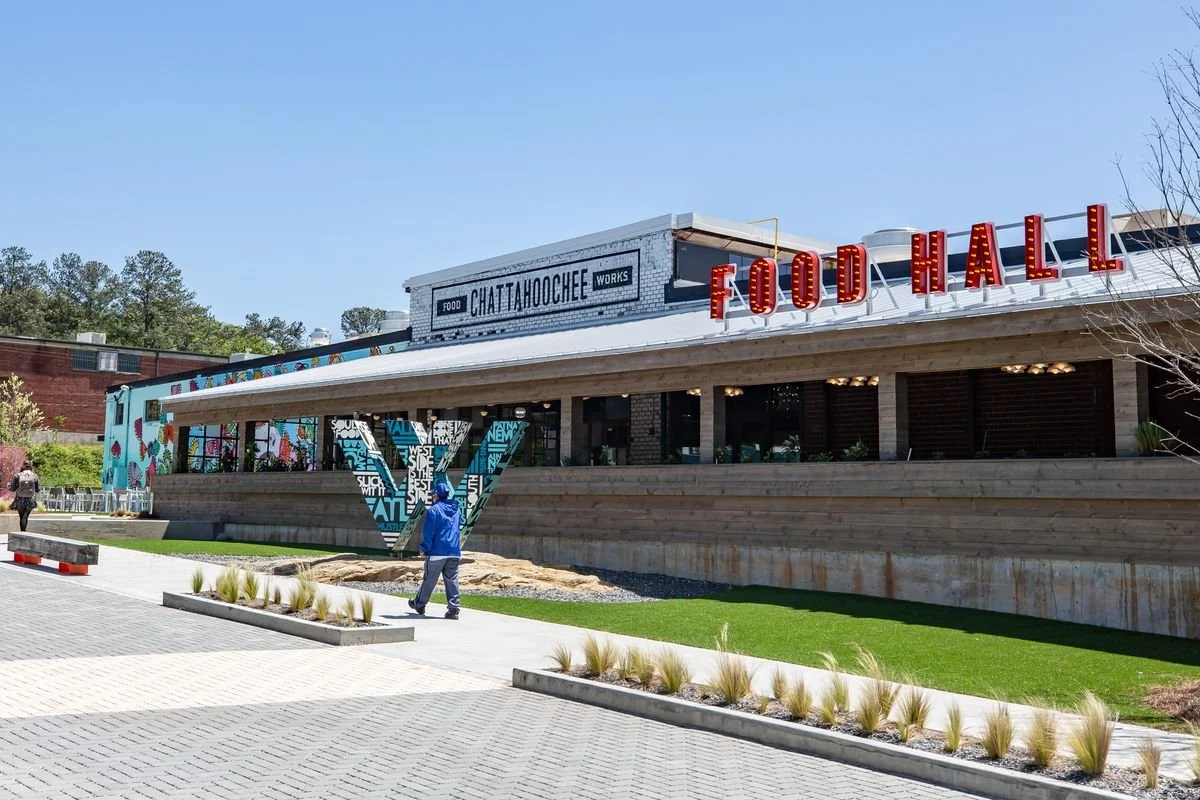
Chattahoochee Food Works: Where the Model Was Forged
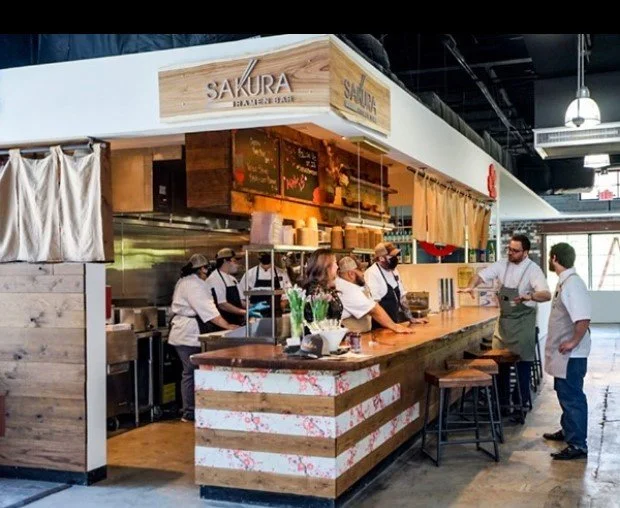
Chattahoochee Food Works in West Midtown Atlanta was one of the projects where terra alma's approach to local curation took real shape.
The food hall model, by its nature, concentrates the stakes you're bringing multiple independent operators into a shared environment, each dependent on the others to create a complete experience, each with their own concept, their own following, and their own operational challenges.
What worked at Chattahoochee wasn't just the tenant mix.
It was the intentionality behind it.
Make it stand out
We were looking for operators who each represented something distinct a flavor profile, a cultural story, a community that wasn't yet seeing itself reflected in West Midtown. The goal was for a visitor to walk through that space and feel like they'd encountered something they couldn't find anywhere else in Atlanta.
National chains can't create that feeling. Only local operators can, and only if they're given the right platform.
The operators who thrived there did so in part because we stayed in the relationship after the lease was signed. That's a distinction worth understanding: placement without ongoing support is not curation. It's just leasing with better taste.
South End Norcross: Downtown Activation From the Ground Up
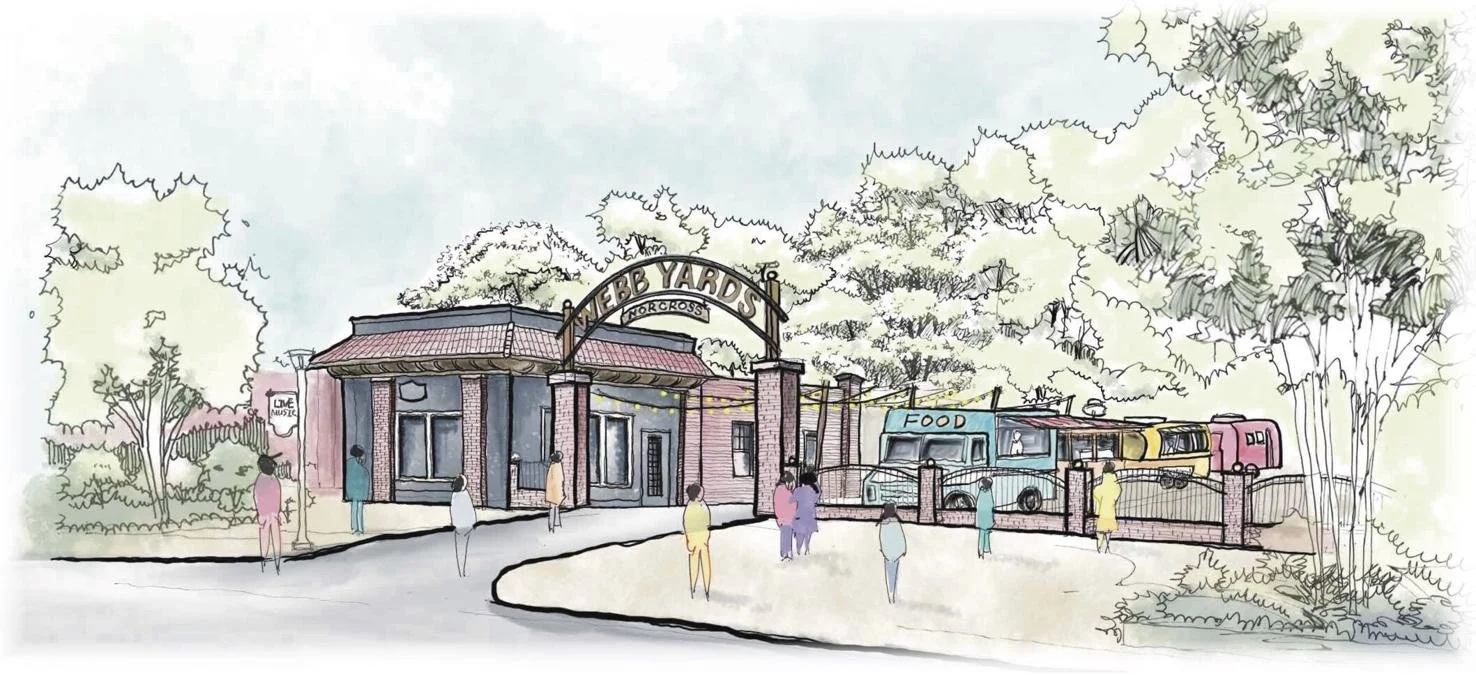
South End Norcross is a different kind of project not a food hall inside a mixed-use development, but a ground-up downtown activation in a historic Gwinnett County city, anchored around an adaptive reuse of a former engine building.
The challenge there was one that terra alma encounters constantly in emerging downtowns: the operators who belong in a place like Norcross are often local to that specific community, which means they have deep roots and real loyalty but limited experience with commercial real estate.
Luis Fernandez, the entrepreneur behind Mojitos and The Crossing Steakhouse, wasn't looking to import a tenant roster from Atlanta. He wanted the development to feel like Norcross to draw on the richness of a genuinely diverse, multigenerational community that had been underserved by its commercial environment for years.
That meant our curation process was as much community listening as it was operator recruitment. We were looking for businesses that already had a relationship with Norcross residents operators who showed up at local events, who knew their customers' names, who understood the specific mix of cultures and tastes that make that city distinct. Refuge Coffee Co. brought that. Butter & Cream brought that. South End Smokehouse, set to anchor the micro food hall, will bring this. None of them are household names outside their market. All of them are exactly right for the place they're in.
That specificity is what makes a development feel like it belongs to its community rather than having been imported into it.

The Austin 600-Acre Project: Incremental Retail for Long-Horizon Communities
The most complex curation challenge terra alma has taken on is also the most instructive for developers thinking about large-scale master-planned communities: a 600-acre mixed-use project outside Austin, Texas with a ten-year build-out timeline.
The fundamental tension in a phased MPC is that retail needs people to survive, but people need retail to want to move in.
If you wait until the community reaches critical mass before introducing retail, early residents feel like they're living in a construction site. If you bring in permanent retail too early, you're asking operators to survive on a customer base that doesn't yet exist.
The answer terra alma developed alongside the urban planning and design team is what we call incremental retail a strategy for introducing authentic commercial activation at each phase of a community's development, scaled to the population that actually exists at that moment rather than the one projected for year seven.
In Austin, that meant starting with a model home and a pocket park. Then an Airstream serving coffee in the morning and small bites and drinks in the evening an operator who could build a relationship with early residents without the overhead of a permanent brick-and-mortar space. From there, the plan scales: a town green, then a micro food hall, then permanent ground-floor retail as the residential density grows to support it. Each step uses local and emerging operators who are appropriately sized for the moment, so that by the time the community reaches full build-out, it has an authentic commercial ecosystem that grew with it rather than being dropped into it from the outside.
The insight behind incremental retail is deceptively simple: local operators are not just a stylistic preference. They are a strategic tool for building community identity and resident loyalty at every stage of a development's life, precisely because they are responsive, flexible, and deeply invested in the place where they operate. A national chain can't run an Airstream coffee concept for the first 200 households in a new community. A local maker can and will build relationships there that no amount of marketing spend can replicate.
What This Means for Developers
If you're planning a master-planned community, a mixed-use development, or a downtown activation and you want local operators at the heart of it, the most important thing to understand is that curation is not a task you hand to your general leasing broker alongside the rest of the retail. It requires different relationships, different deal structures, different timing, and a different definition of success than conventional commercial leasing.
terra alma exists at the intersection of those two worlds. We hold brokerage capability — we can execute the lease — but our value is in everything that happens before the lease is signed and in staying in the relationship after it is. That's what it means to build places that endure rather than just lease up.
💭 If you’re thinking about how to create places people choose — not just once, but over time — I welcome thoughtful conversations with developers, city leaders and land stewards shaping the next generation of communities.